ORANGE PARK MEMORIES - HELLMUTH HOUSE
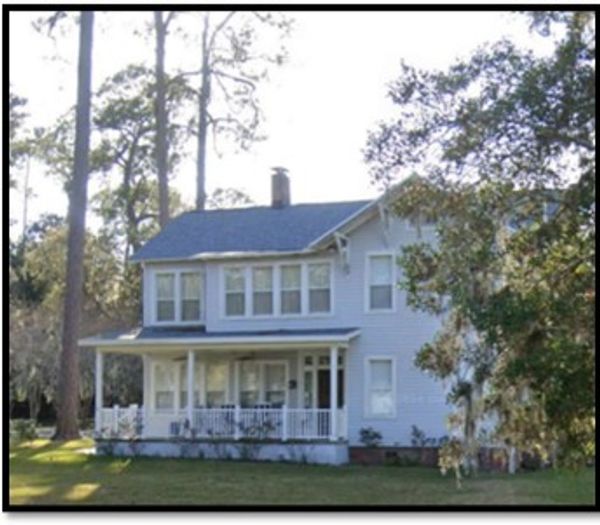
This house was designed by James Gurren, a local builder. A five-acre tract of Benjamin Stiles's former holdings was acquired in 1911 by Lincoln and Emma Spencer of Jacksonville who developed the houses at 1434 and 1454 River Road about 1913. The Spencers lived in Orange Park until about 1916, when they moved to Jacksonville. Lincoln was secretary of the Marshall and Spencer Company of Jacksonville, a building supply company.
The Spencers probably occupied the dwelling at 1434 River Road and developed this dwelling for rental property. and retained ownership of the two properties until 1917, when they divided their holdings, selling the house at 1454 River Road to John and Mayme Elton of Jacksonville. Elton, a real estate agent, also used the home as a seasonal and weekend retreat. He sold the residence about 1919 to Richard Sasnett, a native of Georgia who arrived in Jacksonville about 1917 and for a brief period operated a real estate company. Several years later, he moved to Orange Park.
Between 1913 and 1915, Spencer served as a commissioner on the Orange Park town commission, as town clerk in 1914, and between 1929 and 1931, he served as mayor of the town. About 1920, he built a second, smaller two-bedroom dwelling behind the house for his mother- in-law, Lucy Bophern. In 1919, Richard Sasnett, mayor of Orange Park from 1929-1932, made this his home.
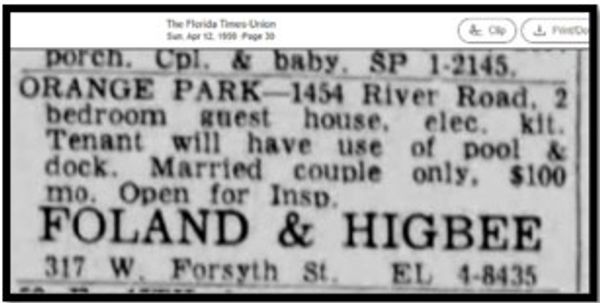
In 1963, John and Vera Hellmuth and their three sons purchased the house from Mr. McGiffen, the owner since 1946. It has been the Hellmuth family ever since. John was the owner of Culligan Water Service in Jacksonville and served as mayor of Orange Park. Vera was very involved in the Garden Club of Orange Park. They were members of Grace Episcopal Church for many years.
This 4000 sq. ft. home has 4 bedrooms, 3.5 baths on nearly two acres of waterfront. There is a 4-car garage and a 1500 sq. ft. addition that has a high-vaulted family room and modern kitchen. The addition was once home to the property caretaker and his wife.
Historical features in the home include original molding, handcrafted trim and authentic wood floors. Several brick fireplaces and an outdoor pool accent the seasons. The construction is heart pine from the frame to the floors. The original steam heat system was replaced by the Hellmuth family in the early 1990s. The original knob and tube electrical system, dating from the 1930s, is still in place though service in the house has been updated.
by Cindy Cheatwood
ORANGE PARK MEMORIES - PARMENTER-HEINRICH HOUSE

The Parmenter house at 1724 Plainfield Avenue was originally built in 1900 by William E. Parmenter. He was an 1877 Harvard graduate who moved to Florida from West Cambridge, Mass, his birthplace. Mr. Parmenter bought 20 acres of land and grew fruit and vegetables in Orange Park.
He lived alone until 1894 when he married Miss Ione Fisher. They started a family and their house grew along with the family. From 1909-1912, he was mayor of Orange Park.
Parmenter kept records of all kinds and maintained at least three daily journals. These have been preserved in the state archives in Tallahassee and can be viewed by appointment there. The boxes are a treasure trove of early voting ballots, agricultural notes and family mementos. They even contain scripts that the Parmenter’s created for periodic productions presented to the community starring townsfolk as actors.
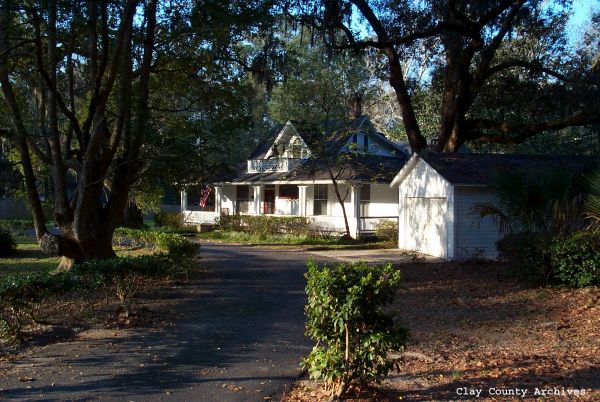
The house was purchased in 1952 by Dr. and Mrs. Edwin Paul Heinrich, founders of St. John’s Country Day School. Dr. Heinrich immigrated to America during World War II from Germany, facing an no shortage of backlash in the states. Still, he persevered and was very successful. Following his death, the house was sold in 1993 to Reverends Robert and Linda Standifer, who were highly active in the community. They preserved the historical elements of the house and shared these with friends and neighbors. Bob Standifer was mayor of Orange Park from 2010-2011. The Standifer’s were charter members of the Historical Society of Orange Park.
The 1884 map of Orange Park shows this lot as 15 acres completely planted with orange trees, no structures at all. The devastating freezes of the 1890s changed that. A sizable number of smaller lots were created as the area was replatted.
With over 2,200 square feet, this house has 5 bedrooms, 3.5 baths with sunny porches on three sides. Original wood floors and door hardware keep the historical character of the home, along with leaded glass windows and 4 fireplaces. It reflects the historical charm of Orange Park, Florida.
by Cindy Cheatwood
ORANGE PARK MEMORIES - JOHN MCCAIN HOUSE
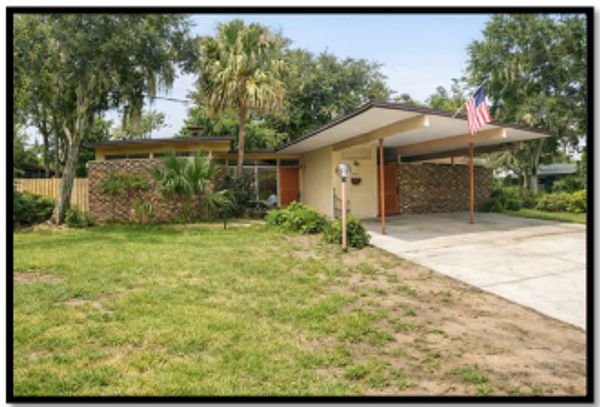
Each month of this year, we recognize one historic home in Orange Park. This month, in honor of POW/MIA Recognition Day on Sept. 19, 2026, we are featuring the John McCain House at 553 Fatio Lane in Orange Park. The house, built in 1958, is a 4-bedroom, 3 bath ranch style, rich in architectural character. It features the influence of Robert C. Broward, the celebrated Jacksonville architect, blending Florida traditions with modern features incorporating the natural world.
Broward’s thoughtful mid-century modern details are obvious. With a low, sheltering roofline, featuring generous overhanging eaves, it fosters shade and channels rainwater away from the foundation, one of Broward’s lifelong obsessions. Clerestory windows sit high above eye level, bringing natural light and ventilation while also providing privacy. This is a nod to what he admired in architect Frank Lloyd Wright’s work.
Inside the house there are exposed wood beams and natural finishes, with a long horizontal focus to make the rooms feel larger. The living and dining spaces flow together in an open plan, rare for mid-century Orange Park, anchored by a brick feature wall with a fireplace and built-in shelving. The compact, efficient kitchen looks over the backyard through a wide picture window framed in cypress.
The bedrooms follow a classic Florida ranch pattern with pocket doors to save space, carefully placed windows for cross-ventilation, and built-in storage spaces. The master bedroom opens on a small, screened porch, another Broward specialty.
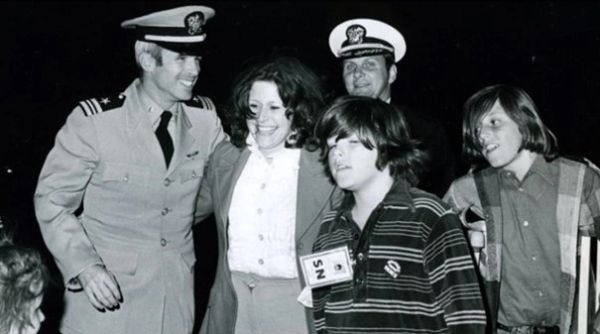
It was in this thoughtfully crafted 2,100 square-foot home that Carol McCain raised her children during the years her husband, Navy pilot John McCain, served overseas. This home, along with the community, provided stability and comfort when John was shot down over Hanoi in 1967.
When John McCain returned from captivity in 1973, he stepped back into American life here, in Orange Park. Today, 553 Fatio Lane is a meaningful piece of Orange Park’s architectural and civic history.
by Cindy Cheatwood
ORANGE PARK MEMORIES - MAIERFELDT-BOATWRIGHT HOUSE
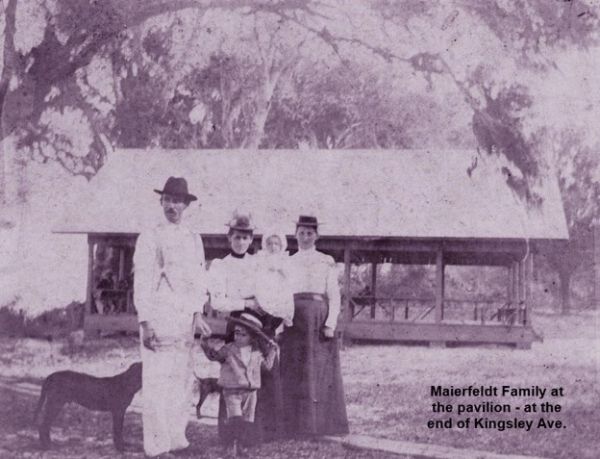
Each first of the month we highlight an historic home in Orange Park. For August, it is the Maierfeldt-Boatwright House - 2206 Reed Street, built in 1880. The first owner of this Reed Street property was Mary Jane Taylor who purchased the lot from Washington Gano Benedict, chief founder of the town. On May 11, 1878, William Maierfeldt purchased land in Orange Park to build a home and start a farm, becoming one of the town’s founding patriarchs. This house and his 120-acre farm were situated on both sides of Plainfield Avenue, west to the river and south to Doctors Lake with 2100 feet on the water. The family operated a successful truck farm for forty years with crops and an orange grove that included 600 trees in orchard form. He also had 17 acres of fine peach trees, strawberries, tomatoes and Irish potatoes. There was even a small pear orchard because Mr. Maierfeldt had introduced the LaConte pear to the region.
William Maierfeldt told stories that would later be written in a small book, Early Days in Orange Park. The charming tales of life in early Orange Park are the stories of Florida and a growing nation. The close relationship between people and the environment reminds us to treasure simple things and to be stewards of our resources. You read of steamboats and shenanigans, of enterprise and experiment. Maierfeldt’s portrayal of the town’s history helps readers conceptualize the time and place.
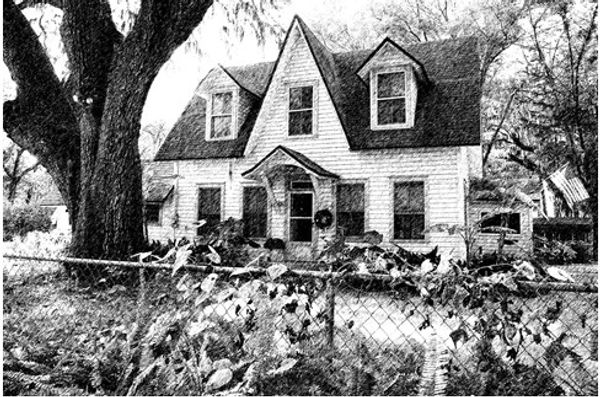
In 1956 George and Maxine Boatwright became the owners of this house on the corner of Reed Street and Milwaukee Avenue. It is reputed to be the second oldest house in Orange Park standing 1½ stories high with 3 gables, and a wood framed structure. Mr. Boatwright rebuilt part of the foundation. When remodeling the roof, he said that he was amazed to find that the roof lumber was crudely made. He expected that 100 years ago or so, that Craftsmen would take pride and care in their work and take the time to make it solid.
The house has 2½ bedrooms upstairs, a dining area (once a kitchen), living room, a den (once a sewing room), and a bedroom downstairs. Mr. Boatwright added a kitchen and had made the old kitchen into a Spanish-style dining area. The ceilings are approximately 10 to 12 feet high.
The house seemed enchanted to the Boatwrights. George told of mysteries about the house. "Doors open and close, but I think they can be naturally explained," he said. Maxine Boatwright spoke about "house noises," doorknobs turning, witnessed from her seat across the room. They both talked of their dog who barked and growled for quite a while staring at the ceiling with his hair all standing on end. Once, one of their dogs was so scared and couldn't get out of the house, that he jumped through an upstairs window, screen and all. They didn't think of their home as spooky, for all homes have strange little noises and mysteries.
Maxine Boatwright was recognized for her outstanding citizenship. In 1956, Gov. Fuller Warren appointed her Justice of the Peace. She was a realtor and worked for 20 years in the civil service area of NAS Jax and won high praise for her work there.
by Cindy Cheatwood
ORANGE PARK MEMORIES - MILLER-HALLIGAN HOUSE
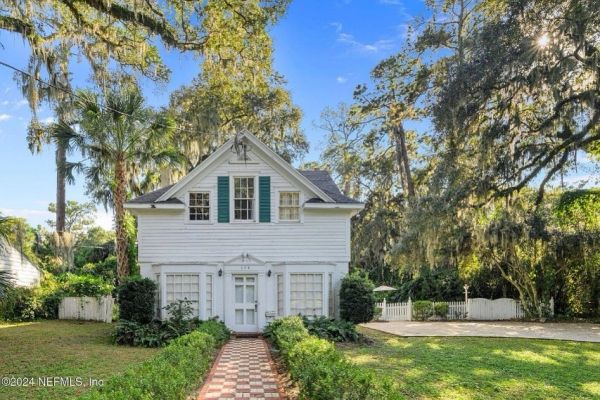
This month, we feature the Miller-Halligan House, located at 154 Stiles Ave. This unique Colonial Revival home was originally part of the Buckman estate in the Riverside area of Jacksonville. Architectural evidence and comparisons with similar buildings of the style indicate that the building was constructed about 1895.
The Buckman family was prominent in state and local politics. Thomas Buckman, the original owner of the house, served as Clerk of the Circuit Court for Duval County for twenty years. Thomas’ son, Henry Holland Buckman, Sr., built and operated the Florida, Atlantic and Gulf Central Railroad between Jacksonville and Tallahassee. He also served in the State Legislature and was the author of the Buckman Bill of 1905, which consolidated various publicly funded colleges into what are known today at the University of Florida, Florida State University and Florida A&M University. Henry Holland Buckman, Jr. is also the namesake of the Buckman Bridge that connects Orange Park and Mandarin.
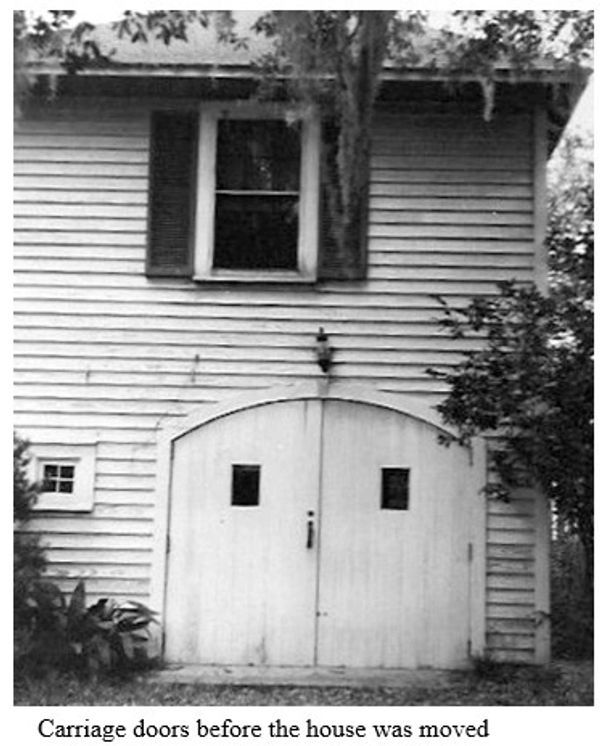
The Buckman house was expanded about 1925 to include a carriage and guest house. By 1951, Courtland Buckman, Thomas Buckman’s youngest son and owner of the house, was interested in selling the carriage house. He found a willing buyer in Ivan Huron Smith, a founding partner in the Reynolds Smith and Hills architectural firm of Jacksonville. Mr. Smith wanted the carriage house for his widowed sister-in-law, Vernice Miller. He arranged to have the house moved. Great pains were taken to transport what had once been the Carriage House of the Buckman estate of Riverside in Jacksonville, Florida to Orange Park’s Stiles Avenue. The building was moved in three sections down the St. John’s River. After placement at its new location, Mr. Smith supervised its remodeling.
Mrs. Vernice Miller lived there for 35 years until her death in 1986. when it was purchased by Bill and Effie Halligan. Bill Halligan was a New Yorker and a US Army veteran of World War II who enlisted at age 17 by changing his age on his registration card. He had 5 daughters with wife, Martha Jane who died in 1983. He later married Ester Mae Young who also had 5 children. They were married 34 years before his death in 2020.
by Cindy Cheatwood
ORANGE PARK MEMORIES - JESSE V. CARNES HOUSE
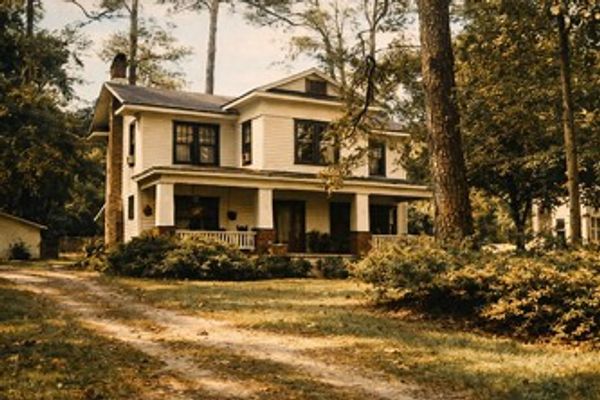
The Jesse V. Carnes House, located at 1506 River Blvd., was constructed about 1912 on land which was once owned by Benjamin F. Stiles of New York. Stiles was one of the most prominent citrus growers and real estate developers in the Orange Park area during the post-Civil War Period.
The 3-bedroom, 1.5 bath Colonial Revival home was constructed for Jesse V. Carnes and his wife, Mary Grace Carnes. Carnes came to Florida from Steubenville, Ohio in 1893. He initially settled at Jacksonville, where he opened a fish processing plant under the name J.V. Carnes Company. He moved to Orange Park in 1904 and there continued operation of his business.
Carnes was a leading political figure in Orange Park during the early twentieth century. He served as town mayor for many years and as a town commissioner.
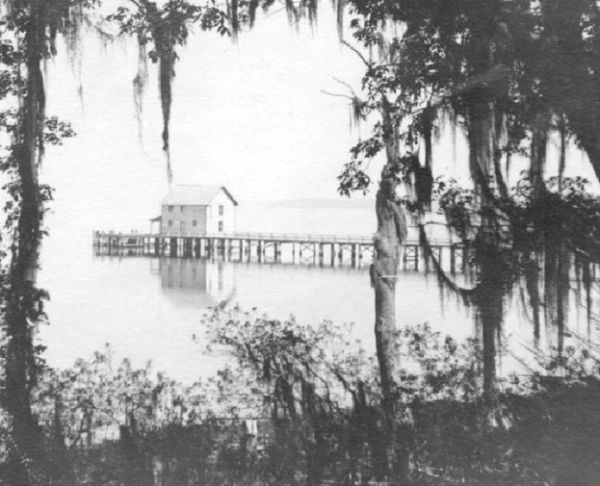
His first fishing business site in Orange Park was a two story building on the town pier at the end of Kingsley Ave. In 1914 the plant was moved to what we now call Nelson Point, on Doctors Lake. With room to expand, J.V. Carnes Co. became the hub for a rapidly growing commercial fishing industry in the area. On early mornings the catch gathered the night before was unloaded, headed, gutted, weighed and a price negotiated on the spot. Waste was piled up on the beach and the rest packed in boxes with ice and moss and loaded into waiting trucks which lit out for Jacksonville and points unknown.
In 1922 the Carnes sold their home and it went through several other owners. In 1935 it was sold to the Southern District Home for Aged British, a group that provided, within the State of Florida, a home for aged men and women of British birth or British ancestry not exceeding two generations from British residency.
The home retains its original charm in many ways. Hardwood floors throughout most of home. and a huge walk-in pantry reflect the early 1900s. There are features such as the eat-in-kitchen, dining room, family room with fireplace and seating area at top of stairs that add charm to the home. Shingle siding and shingle roof makes the house stand out among the historic homes on River Road.
by Cindy Cheatwood
ORANGE PARK BOOK BY LOCAL AUTHOR
Images of America - Orange Park
This book is an excellent resource on the history of Orange Park. Written by Society President, Cynthia Cheatwood, it combines stories and information from a variety of sources with archival photographs to tell the story of Orange Park.
CLICK TO BUY NOW $27.00 (Free Shipping)